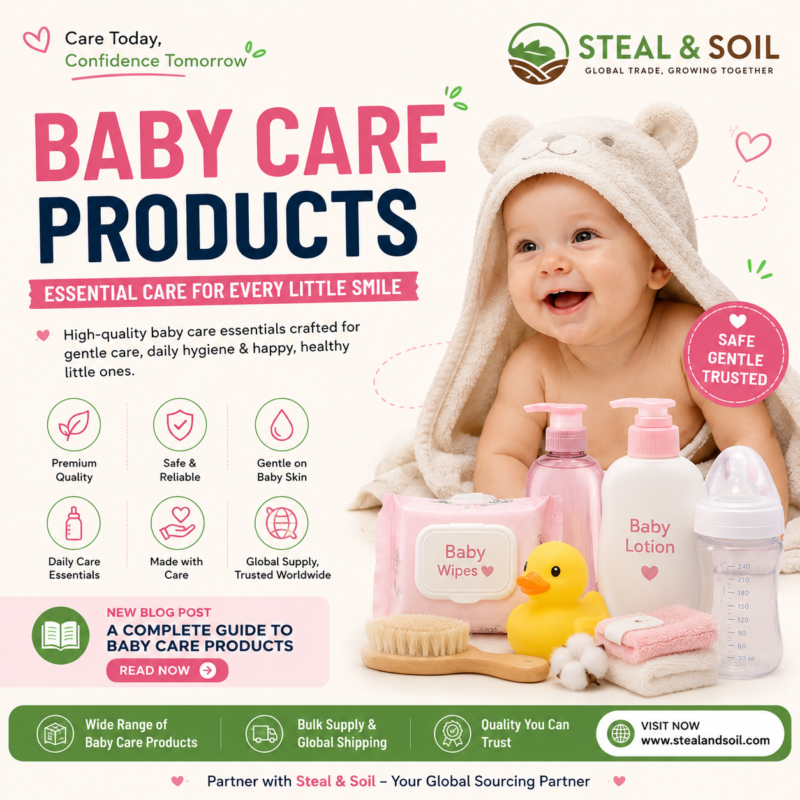
When it comes to caring for babies, choosing suitable products is an important part of creating a comfortable, hygienic, and well-organized daily routine. Parents, caregivers, retailers, distributors, and childcare businesses all look for dependable baby care products that combine practicality, quality, convenience, and appropriate safety considerations.
For businesses sourcing products in larger quantities, finding a reliable supplier can be equally important. Steal and Soil provides a broad international trading platform covering multiple product categories, making it possible for buyers to explore different consumer and everyday-use products through one supplier. The company’s website also presents products across food, agriculture, technology, and other categories.
What Are Baby Care Products?
Baby care products are items designed to support everyday infant and childcare routines. Depending on the product category, these essentials can include personal-care items, hygiene products, feeding-related accessories, clothing, nursery essentials, and other products used by parents and caregivers.
Because babies have specific care requirements, product selection should focus on suitability, quality, materials, packaging, labeling, and age recommendations.
For retailers and wholesalers, these considerations become even more important because products may be supplied to a wide range of customers with different requirements.
Why Quality Matters in Baby Care
Quality is especially important when sourcing products intended for babies. Parents naturally want products that are practical, appropriately designed, and manufactured according to relevant standards.
When evaluating baby care products, buyers can consider factors such as:
- Product materials
- Manufacturing quality
- Packaging condition
- Product labeling
- Age suitability
- Usage instructions
- Storage requirements
- Applicable certifications
- Supplier reliability
- Batch or product identification
The exact requirements will vary depending on the type of baby product being considered.
Baby Care Products for Everyday Routines
Baby care involves many small daily activities, from hygiene and feeding to changing, sleeping, clothing, and general comfort. Having suitable products available can make these routines more organized for parents and caregivers.
For example, baby-care categories may include products designed for:
- Baby hygiene
- Bath-time routines
- Changing and cleaning
- Feeding
- Nursery organization
- Clothing and accessories
- General childcare
- Infant comfort
The right products depend on the child’s age, individual needs, and the recommendations provided by the manufacturer.
Choosing Baby Hygiene Products
Hygiene is an important part of everyday childcare. Products used around babies should be selected carefully, with particular attention to labeling and intended use.
Parents and retailers should check whether a product is specifically designed for babies and whether the packaging provides clear instructions. Products intended for adult use should not automatically be assumed to be appropriate for infants.
When purchasing in bulk, businesses should also check packaging consistency, shelf-life information where relevant, product specifications, and storage conditions.
Baby Products for Retailers and Wholesalers
The baby-care market includes a wide variety of products, creating opportunities for retailers, distributors, importers, and wholesalers.
For businesses, wholesale sourcing can simplify inventory management when products are available in suitable quantities and packaging formats. However, price should not be the only consideration.
A reliable sourcing process should also evaluate:
- Product specifications
- Minimum order quantities
- Packaging
- Product documentation
- Quality-control information
- Shipping arrangements
- Delivery timelines
- Supplier communication
- Applicable regulations
- Return or replacement policies
This approach can help businesses build a more dependable product inventory.
Understanding Product Labels
Product labels provide important information that should be reviewed before purchasing or distributing baby-care products.
Depending on the product, labels may provide information about:
- Product name
- Ingredients or materials
- Manufacturer
- Country of origin
- Age recommendation
- Directions for use
- Warnings
- Storage information
- Expiration or best-before information
- Batch or lot number
Retailers should make sure that products are properly labeled and packaged before placing them into inventory.
Safety Considerations for Baby Products
Safety should always be considered when selecting products for infants. Babies interact with products differently from adults, and some products may present risks if they are unsuitable for a particular age or used incorrectly.
Caregivers should follow manufacturer instructions and age recommendations. Products should also be inspected for damaged packaging, broken components, loose parts, or other visible problems before use.
For businesses, maintaining appropriate product records can help support traceability and responsible distribution.
Buying Baby Care Products in Bulk
Wholesale purchasing can be useful for businesses that need consistent inventory. Retail stores, distributors, online sellers, childcare organizations, and other businesses may require larger quantities than individual consumers.
When purchasing baby care products wholesale, buyers should consider the quantity required, packaging format, storage capacity, shipping requirements, and expected demand.
Bulk purchasing can be efficient when inventory is properly planned, but businesses should avoid ordering quantities without first considering product shelf life, storage conditions, and market demand.
Importance of Reliable Packaging
Packaging serves several purposes. It protects products during transportation and storage while also providing consumers with important information.
For baby-care products, packaging should be intact, clearly labeled, and appropriate for the product. Damaged or incomplete packaging should be reviewed before products are distributed.
For international sourcing, packaging can become particularly important because products may travel through multiple stages of transportation before reaching their final destination.
International Sourcing of Baby Care Products
Businesses sourcing products internationally need to consider more than product availability. Import requirements, labeling rules, customs documentation, shipping terms, and destination-country regulations may all affect the purchasing process.
Steal and Soil operates as a global trading platform with products serving different categories and markets. Its website demonstrates a broader international sourcing model across consumer and commercial product categories.
Businesses should independently confirm that any baby-care product they intend to import or distribute meets the requirements of their destination market.
How to Choose a Baby Care Supplier
Choosing the right supplier can make a significant difference to a business’s purchasing experience.
A good supplier evaluation process can include checking:
Product Range
A supplier with a suitable product range can make inventory planning easier and potentially reduce the need to coordinate with multiple vendors.
Product Information
Clear specifications help buyers understand exactly what they are purchasing.
Quality Documentation
Where applicable, certificates, testing information, batch details, and other documentation can provide additional information about product quality.
Packaging and Shipping
Businesses should understand how products are packaged and transported, particularly when ordering internationally.
Communication
Clear communication regarding quantities, specifications, pricing, shipping, and documentation can reduce misunderstandings.
Baby Care Products for Modern Families
Today’s parents often look for products that fit conveniently into busy lifestyles. Practicality, ease of use, reliable packaging, and clear product information can all influence purchasing decisions.
However, convenience should not replace careful product evaluation. Baby products should always be selected according to their intended purpose and the child’s age and requirements.
Retailers can support customers by providing accurate product descriptions and avoiding unsupported claims.
Building a Baby Care Product Inventory
For retailers, developing a successful baby-care inventory requires understanding customer demand. Instead of stocking every available product, businesses can identify the categories most relevant to their target customers.
Inventory planning may consider:
- Customer demographics
- Popular product categories
- Seasonal demand
- Product shelf life
- Storage requirements
- Packaging sizes
- Wholesale quantities
- Shipping costs
- Local regulations
Keeping accurate inventory records can also help businesses avoid shortages or excessive stock.
Quality, Transparency, and Responsible Sourcing
Responsible sourcing is becoming increasingly important across consumer-product industries. Buyers want to know where products come from, how they are packaged, and whether relevant product information is available.
For baby-care products, transparency is particularly valuable because consumers are making purchasing decisions for infants and young children.
Businesses should therefore prioritize accurate descriptions and avoid making medical, safety, or performance claims that cannot be supported by appropriate evidence.
Why Choose Steal and Soil?
Steal and Soil is positioned as a global trading platform offering products across multiple categories. Its website includes diverse commercial and consumer products, with product pages providing specifications for individual items where available. For example, other product listings on the website provide details such as packaging, origin, shelf life, certifications, and product specifications.
For buyers exploring the baby care category, reviewing individual product specifications and confirming current availability directly with the supplier is important.
The specific characteristics of each baby-care product can vary, so customers should evaluate individual listings rather than assuming that every product has the same specifications.
Frequently Asked Questions About Baby Care Products
What are the most important factors when choosing baby care products?
Product suitability, age recommendations, materials, labeling, packaging, manufacturer information, and applicable safety requirements are important factors.
Can baby care products be purchased wholesale?
Yes, many baby-care products are available through wholesale and commercial supply channels. Buyers should confirm minimum order quantities, packaging, shipping, and product documentation.
What should retailers check before stocking baby products?
Retailers should review product specifications, labeling, packaging, applicable certifications, storage requirements, supplier information, and local regulatory requirements.
Are all baby-care products suitable for every age?
No. Products can have specific age recommendations or intended uses. Buyers and caregivers should follow manufacturer instructions.
Why is product documentation important?
Documentation can help buyers verify product identity, specifications, packaging, batch information, and other relevant details.
Conclusion
Finding the right baby care products requires careful consideration of quality, suitability, labeling, packaging, documentation, and supplier reliability. For parents, the priority is selecting products appropriate for their child’s needs. For retailers and wholesalers, additional factors such as quantity, storage, logistics, product documentation, and regulatory requirements become important.
Steal and Soil provides a global trading platform with a diverse product portfolio and international sourcing focus. Businesses interested in the baby-care category should review individual product information and confirm specifications, availability, and commercial terms before purchasing.
Whether you are a retailer, distributor, importer, or business buyer, a structured sourcing process can help you build a more reliable baby-care inventory. By prioritizing quality, transparency, accurate product information, responsible sourcing, and customer needs, businesses can make better-informed decisions in the growing baby-care market.
